Watch the explosive demolition on the link below:
Explosive Demolition at Ironbridge Power Station
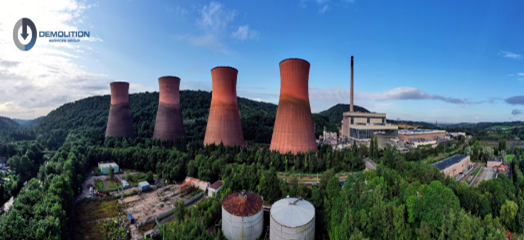
Ironbridge Power station, built in 1963 was designed to perfectly blend into its surroundings and became one of the most unique coal power stations in the UK. The cooling towers formed the main attraction in the area with the structures being made from primarily red-pigmented concrete.
These iconic structures saw schools and business taking on their name and shape into their names and logos. Later, the use of coal for power generation got into strong criticism by environmentalists because of the high degree of pollution associated with it.
Despite the decision, made around 2012 to modify the station for use of biomass fuel, the power station had reached the end of its economic life and was subsequently sold for housing development.
The cooling towers were imposing and iconic for the small Shropshire village, a tourist attraction for many, appreciating the industrial revolution of the area and the uniqueness of their red pigmentation.
Not necessarily visible to the eye, the 4 cooling towers were built using 3 different construction designs as well as additional structural support being added due to the structural failure and collapse of other cooling towers around the time of their construction.
As the site was sold to developers, these iconic structures they were earmarked for demolition. Amidst fierce protests by the locals who saw the structures as a great cultural heritage, the English Heritage did not find the concerns valid and concerns over the structural failings and ongoing financial commitment from the local authority to maintain them in a safe condition, permission to demolish was granted.
The proposed demolition caused huge fears for the local authority, village and client as the gorge in which the power station and village was built on was susceptible to landslides.
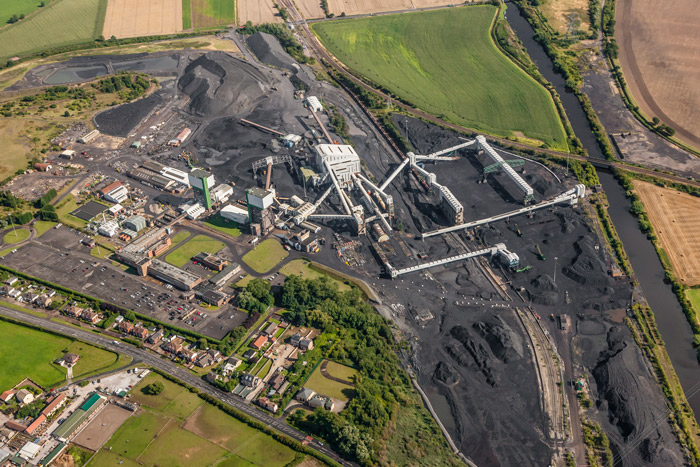
The site itself was home to two live substations of which were required to remain live throughout the demolition works, providing power to hundreds of thousands of homes over five counties across Shropshire and North Wales.
The site subsequently purchased by The Harworth group in 2018 was set to provide upto 1000 houses, a retirement complex, shops and a primary school as part of the new infrastructure for the local community.
Demolition Services, following a 6 year successful relationship with the Harworth group and having demolished a number of former collieries and completed several large scale industrial demolition projects, were enlisted in May 2019 as the Principal Contractor to undertake the demolition of all above ground structures which included the four Cooling Towers, Boiler House, Chimney, Admin Block and other miscellaneous buildings making way for the residential development.
Summary
✓ Contract value circa £18m
✓ Principal Contractor on a 27 month contract coming to a successful end later this year.
Demolition services were contracted to demolish all above ground structures of which, so far has included;
✓ The successful removal of 12,000 tonnes of asbestos cement sheets prior to the explosive demolition of 4No. 114m Cooling Towers
✓ Removal of 800 tonnes of fibrous asbestos from the Boiler house and a number of other structures of which also required the set up and subsequent management of a in house scaffolding division to deal with a range of bespoke and complex scaffolding enclosure requirements on the site
✓ Structural separation, pre-weakening and explosive Demolition of 4500 tonne Steel Bunker Bay
✓ Structural separation and pre-weakening of the former 190 ft tank bay with a designed gravitational collapse due to the absence of any back legs which would more typically be used to aid a rotational collapse
✓ Structural pre-weakening and explosive demolition of the 20,000 tonne bunker bay.
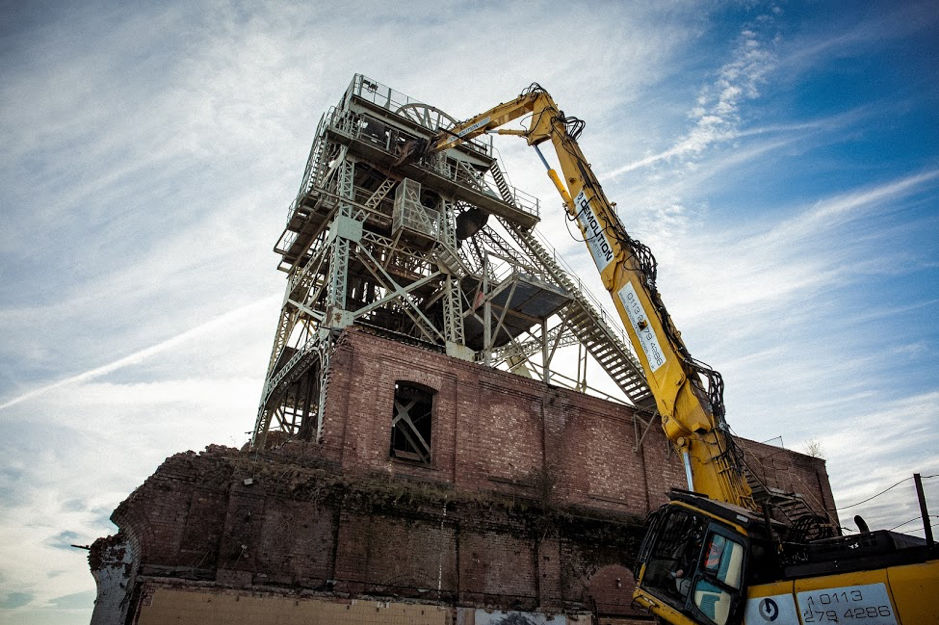
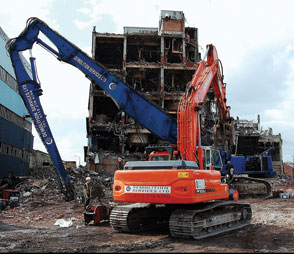
✓ High reach demolition of the former steel framed Turbine hall using its impressive high reach excavator and fortress shear attachment.
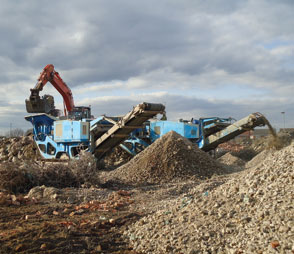
✓ Processing and crushing of all concrete and suitable hardcore material in accordance with a stringent quality assurance and testing regime.
Asbestos Removal
Demolition Services have proudly held its full asbestos license for over 30 years although the scale and complexity of asbestos removal works required at Ironbridge Power Station put the teams knowledge and experience to ultimate test.
It is without question that the power station was the largest project the team had ever undertaken and the teams effort in establishing an in house licensed scaffolding division was nothing short of impressive.
Demonstrating their capabilities, the company flourished as it faced the practical and logistical challenges of identifying and removing considerable quantities of asbestos containing materials.
Fraught with programme deadlines, the challenges began with the identification of all ACM’s which required inhouse surveying and additional sampling to be carried out, over and above those provided as part of the initial pre-construction information.
Asbestos Removal works commenced with the removal of more than 16,000 tonnes of cement bonded asbestos, which made up the internal cooling pack of the four former cooling towers. This task alone, due to the sheer quantity of material, was subject to meticulous scrutiny from the HSE and interested third parties.
The cement sheets were removed with great success over a 12-week period. The technique for removal was similar to the NFDC recognised wet and drop method and despite being subjected to daily background reassurance monitoring over the same period, resulted in a resounding success.
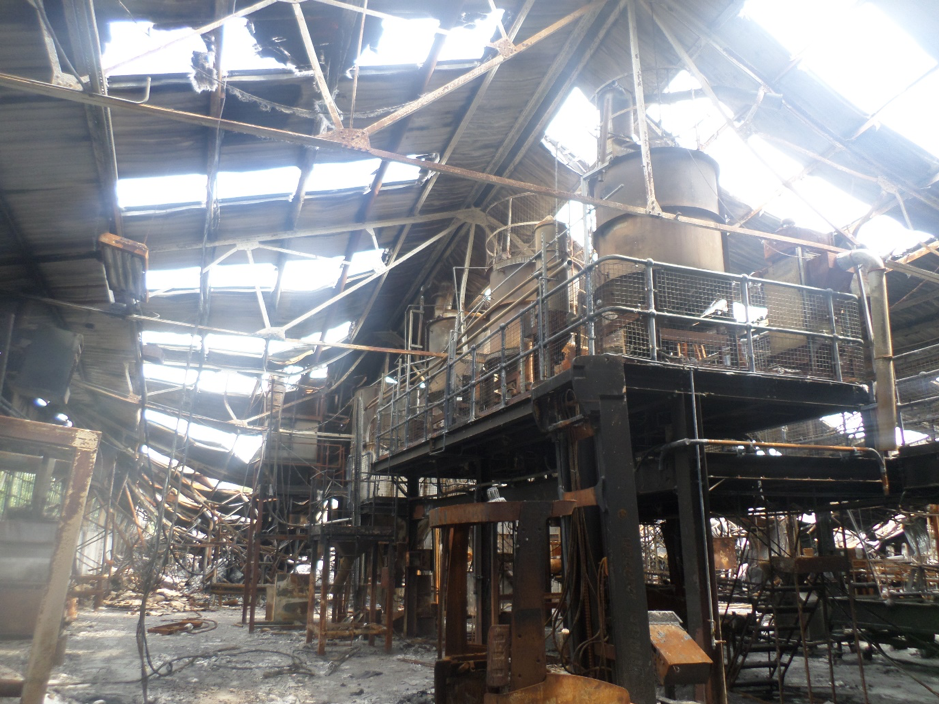
The Boiler House which included the Bunker Bay and Tank Bay undertook extensive Asbestos Removal works over a 22-month period where around 865 tonnes of Asbestos containing materials was removed from site.
The skill, knowledge, programming and co-ordination that was required to complete the asbestos removal works was a huge credit to the team and came having deployed more than
20,800 man hours.
The Cooling towers
As part of the demolition of Ironbridge Power Station it was the intention to demolish the 4 No. redundant cooling towers by the controlled use of explosives.
The towers were of reinforced concrete construction, approximately 114m high with approximate diameter at cut location of 80m.
Due to the collapse of Ferrybridge cooling towers redesign and strengthening works were carried out on the towers. This has led to three different leg and shell configurations.
Planning commenced in July 2019 and it took some five months to achieve an execution date with meetings being held with Shropshire and Telford Council of whom imposed 106 conditions in their section 81, unheard of in the industry from the members of the project management team and those key stakeholders. Nonetheless, the planning and co-ordination meetings dealt with each and every condition and finally a date was set.
During this planning stage, works continued on site with the removal of the asbestos cement double banking system which consumed more than 12 weeks. An impossible task to have ever been carried out manually, the internal banking system was in poor structural condition and a controlled, systematic and progressive approach was required.
Having analysed the cooling tower structures and carrying out a comparative methodology and risk assessment with regard to the feasibility of the use of explosives verses traditional or even alternative methods, the controlled use of explosives was considered the safest method to be adopted.
Explosives are frequently used within the industry with their purpose to offer one of the safest way to remove key elements of a structure in order to initiate a gravitational collapse whilst at all times being able to maintain a safe exclusion zone.
Using explosives in this way allowed us to employ a well-documented method of
demolition referred to as telescoping. Telescoping describes a near vertical collapse
of a structure, caused by initiating enough compressive stress at the base to make
the disintegration at the bottom a continuous process as the structure descends.
This technique required the explosives to cause sufficient movement to initiate the
collapse, after which the gravity provides the main source of energy for the
fragmentation.
Following a number of test blasts, the collapse was initiated by the explosive
removal of 24 pairs of concrete legs (two thirds of their circumference) on each
cooling tower and additionally 24 steel leg plinths on towers 1 and 2 as these were
later strengthened in their construction.
The removal of the legs was supported by the formation of a slot using
explosives, two thirds the circumference of the towers in direction of fall of
which required 2100 boreholes being pre-drilled before being loaded with
explosive charge material.
The practicalities of large scale demolition less than one mile away from a
traditional village, steeped in history and attracting thousands of tourists every
years, led to a number of design considerations.
Irrespective however of their location, there was without question only one
way in which to demolish these 114m high concrete structures, and that was with
the aid of explosives.
The design stage had concerned itself namely with the following:
✓ The location of oil filled power cables, underground between cooling towers one
and two
✓ The close proximity of the WPD Electricity Pylon (65m in an elevated position behind cooling tower two and a second
some 100m away from cooling tower one)
✓ The generation of dust as a result of the proposed demolition works and the impact of the village
✓ The ground vibrations predicted and their impacts as a result of the demolition works in an area that was susceptible
to land slide.
✓ The air over pressure predictions and its impact as a result of the works to the local caravan park residents and local homes
✓ The traffic implications on main village access road itself, the impact on the village and the need to create a safe viewing area in order to mitigate the impact.
✓ Local and frequent landslides were also the cause for huge concern and a geo-technical engineer was tasked with understanding the impact the works would have on the surrounding geology.
Finally, the outcome was the devising of an exclusion zone of which would satisfy the concerns raised and ensure that any risk of impact (incident or harm) was to be eliminated outside of the designated exclusion zone.
The exclusion zone was put in place as planned and extended to 350m and requiring 46 sentries to maintain its exclusion. A further four persons were used in two motorised boats to ensure that the section of the river of which was captured in the exclusion zone, equally remained excluded from all personnel.
Following the blast itself, initial success was evident by the falling of the towers almost instantaneously to the eye, reports soon came back from National Grid and Western Power to confirm that no impact or damage was caused to the underground oil filled cables that lay between cooling towers one and two, the closest electricity pylon which stood in its elevated position, no more than 65 meters away and the 400kv substation itself which shares the site at Ironbridge.
Post blast, the geotechnical engineer carried out checks of the surrounding landscape for evidence of landslide or movement and an all clear was eventually received.
No evidence of damage to trees were reported as sentries were required to inspect the area around them.
Building surveys carried out post blast inspections on those residential properties from which the residents were evacuated and reported no damage had been caused. As not even a window was broken, the glazier on standby was able to be sent away.
As promised during the planning stages, a road sweeper was mobilised, window cleaner put to works and the local scouts group opened a free car wash. Dust was inevitable however the demolition contractor was committed to doing all it could to minimise its impact.
The blast was finally considered a huge success to the contractors, despite earlier concerns from the stakeholders with all 4 towers collapsing as intended and without damage. The collapse of the towers was considered a huge credit to the industry having, in recent times and even in the months prior, suffering from accidents and incidents being reported on similar projects.
Bunker Bay
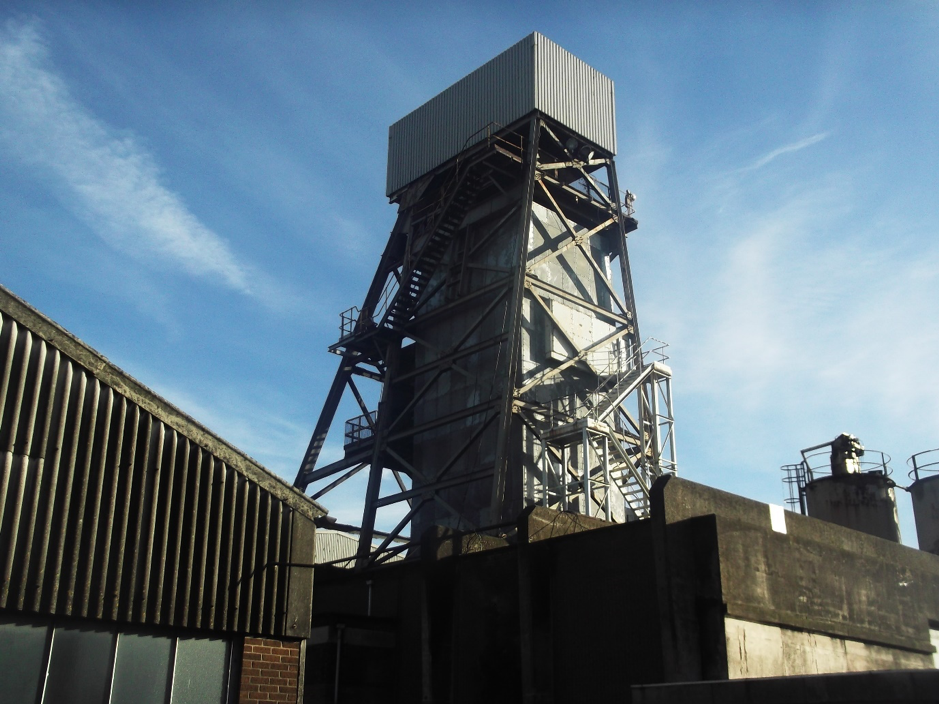
Demolition Services completed structural separation and pre-weakening works, setting their own standards which led to the success of the Bunker Bay demolition at Ironbridge Power Station shortly after 11am on Friday 17th July 2020, working in partnership with SES Explosives Engineers.
The steel bunker bay structure was the first of 3 planned explosive events in order to bring down the former boiler house, with the turbine hall itself having been demolished using traditional high reach methods earlier that year.
The company, working in partnership with site owners Harworth Group Plc had been under the ongoing scrutiny since demolition works commenced in June 2019 by RVA Group of whom act as Principal Designers on the project.
It is taken as a great credit to the company and the demolition project management team, that their experience, proposed methodologies, safe systems of works and planning ethos had surpassed each review stage but had resulted in success after success for the company.
Further credit to the Demolition Services team had been received when their experience challenged design and ultimately led to “the most superior pre-weakening cut design” the project management team has seen to date in the industry.
Planning for the bunker bay demolition did take on new challenges for the project management team and differed from that of the cooling towers as structural pre-weakening and the risk of a premature collapse was at the forefront of everyone’s mind, including that of the HSE.
Demolition Services took no chances and designed a quality control system that was reported to be “the most robust system I have seen so far” by Structural Engineer Rob Clarke of whom led the structural collapse design.
Demolition Services recognised the need to be proactive and invited the HSE to their first internal planning and co-ordination meeting to allow them to present their ideas and get early feedback.
This was proven to be hugely beneficial in gaining the confidence of the key stakeholders and the HSE themselves, as they had done previously with the cooling towers. This early engagement resulted in the lead HSE inspector confirming that the “internal setting out of cuts and checking procedures appears to be robust” whilst further confirming that “it would be good to see how it works for the teams when applied”.
Demolition Services in-house safety systems are the most advanced seen to date and are based on a live cloud based system, providing real-time information, recording signatures electronically, allowing for live tracking of all documentation from site to office and with automatic time and date stamping of all photographs and signatures which cannot be over written.
Demolition Services subsequently developed a robust quality control system which developed the collapse and pre-weakening design into descriptive cut detail sheets that could be understood by all.
This also allowed each and every structural member that required cutting to be allocated a unique cut number led by its sequence number.
This unique number was subsequently tracked throughout the project from the marking up through the cutting with every single cut being marked up in order to minimise the risk of error.
With the permit to cut system being designed by myself being based on a two tier TWC approach, it meant that no one person could allow advances in the pre-weakening sequence.
The quality checks were finally cemented when a photographic report was produced clearly showing every single cut number both after marking up and after cutting, both with time and date stamps on all photographs.
A duel / two tier TWC checking process was evident throughout and resulted in zero non-conformances and a successful collapse on the day.
The Tank Bay and Turbine Hall
Demolition Services, continuing in their success at the Ironbridge Power station once again saw the success of the demolition of the Tank bay on Friday 22nd January 2021, shortly after 11am.
The last 12 months had been a difficult time for the industry with a world pandemic which has resulted in disruption, uncertainty and despair for many. Demolition Services had fought to ensure their high standards are met and they remain strong as an organisation whilst they strive to complete the demolition of the Boiler House.
The Tank Bay structure, as it is referred to, was the front section of the Boiler House, measuring 58m tall and 120m wide.
The collapse design of the Tank Bay itself was complicated in that it relied upon only one set of legs, following the separation of the structure from the remaining boiler house. An uncommon approach as rival competitors have been seen to have demolished tank bay structures at the same time as they would typically demolish the Turbine Hall.
The absence of the back legs, typically hinged as part of the collapse design, were absent in this structure. This meant that less rotation of the structure was expected and more of a gravitational collapse would be seen.
The separation of the Tank Bay and its ultimate collapse relied upon the use of both cutting and kicking charges which resulted in another incident free explosive demolition event for Demolition Services.
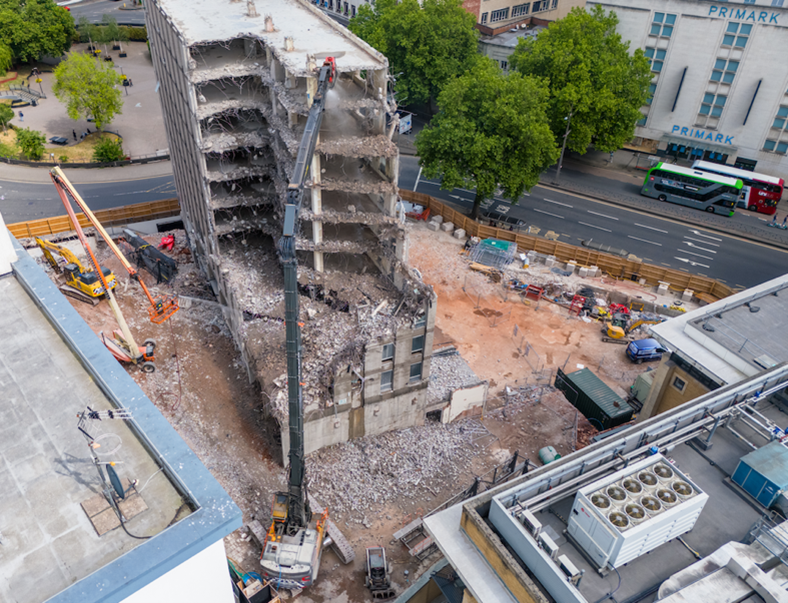
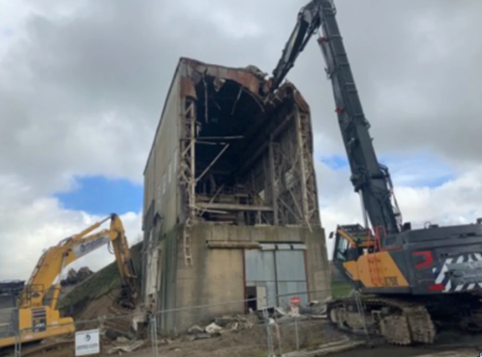
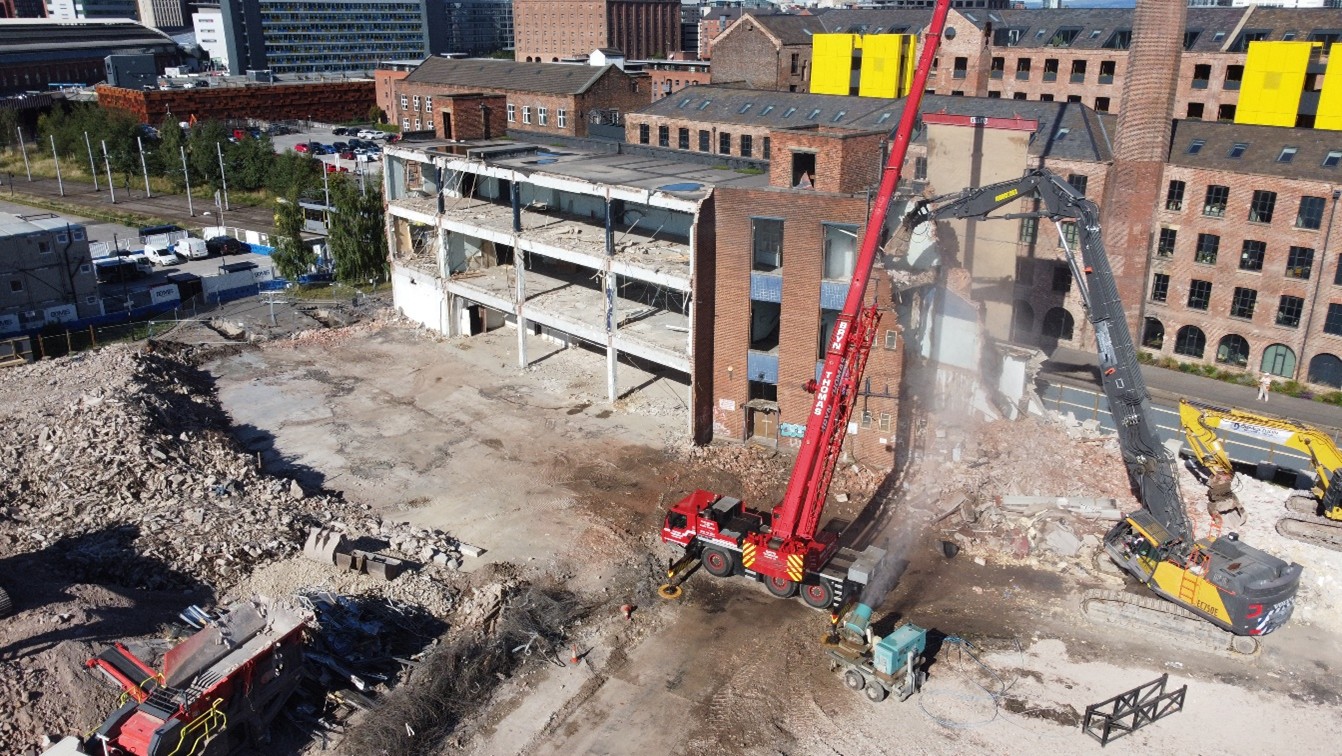
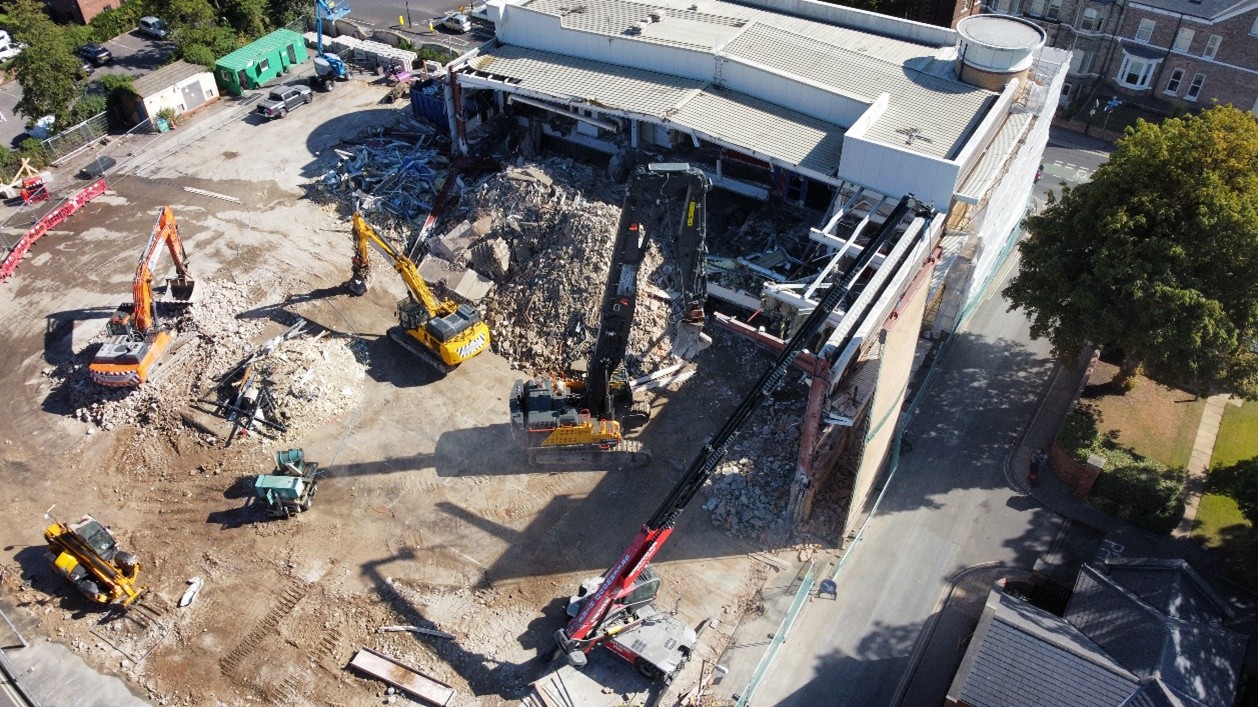
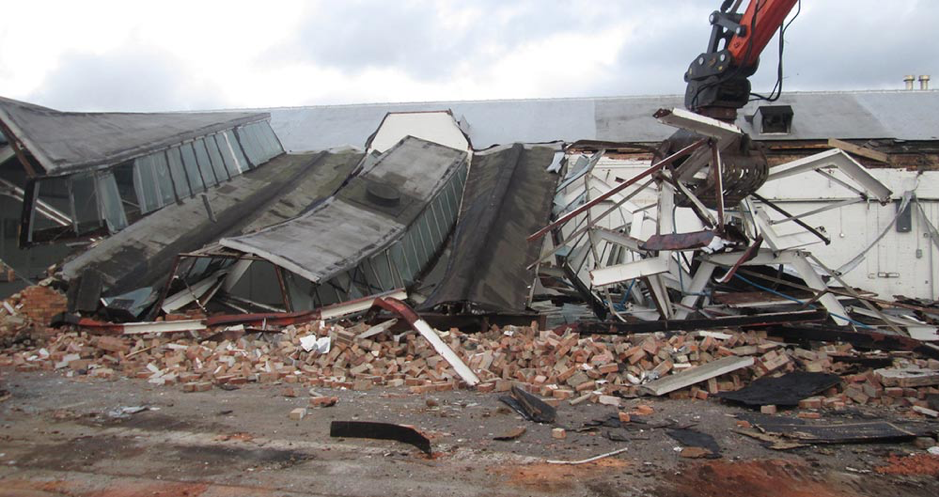
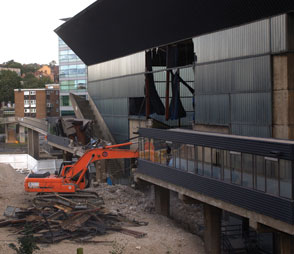
Demolition Services took the decision not to use explosives in the demolition of the Turbine Hall and instead employed high reach mechanical methods which saw the impressive cutting capabilities of their “Fortress“ shear in action.
The Turbine Hall demolition was completed over a 12 week period which to the benefit of the programme, allowed progress on site to continue whilst essential asbestos removal works were ongoing in the Boiler House.
The Boiler Bay
Less than 6 weeks after we saw the Tank Bay demolition, shortly after 10am on Saturday 27th February 2021, we saw the planned collapse of the Boiler Bay, initiated once again using explosives.
This final structure stood at 58m tall and 112m wide, housing two of the stations former boilers. Its demolition generated more than 20,000 tonnes of recyclable material.
While the demolition itself was a mere number of weeks after the Tank Bay, the planning of this momentous event had been ongoing for some time and is testament to the project management teams ability to be able to facilitate the dual planning process.
The pre-weakening design of the boiler house was one of the most complex challenges to be overcome on the site so far and the Engineers worked tirelessly to ensure its design stood up to independent checking and external critique.
The risk of premature collapse was always at the forefront of everyone’s mind and the extent of this scrutiny and rigorous check process provided an element of assurance for all involved.
One thing that became apparent during the design checking process was the obvious desire to design out any risk of premature collapse as the industry strives for improvement.
As the Engineers worked to meet this natural desire and having made a number of suggestions it became clear that although the pre-weaking design had long improved from those historically seen and those of its competitors, ultimately, whilst the risk could be reduced, it was not considered possible to eliminate the risk entirely through design.
Recognising that the risk of premature collapse could not be eliminated by design, the team identified that the quality of workmanship was of paramount importance, in reducing the likelihood of any premature collapse and went about exploring the parameters and tolerances, that could have later been applied to the quality assurance checks carried out on each of the cuts.
Following lengthy discussions, the team concluded that it was not considered possible to measure the accuracy of a cut using a numerical value, series of values, using a measuring gauge and or by applying a series of numerical parameters.
The common outcome when executing the accuracy of the horizontal flange cuts however was to achieve even bearing on the shims. It is this even bearing, that contributes to the stability of the structure in its pre-weakening state.
With the best pre-weaking design, cut detail or marking up system, even bearing could only ever be achieved through cut accuracy which came from the skill of the burner and the workmanship during the works.
Having explored this in more detail, having allowable tolerances, pre-determined for the cut itself, did not alter the quality of workmanship required as there was little opportunity for change once the cut has been completed.
Experience is therefore unquestionable, more so when in doing the blast cuts and a dynamic assessment is continually being made to ensure that sufficient and even bearing has been achieved with the cuts and how the building is reacting in its pre-weakened state.
Offering the ultimate layer of protection in carrying out the pre-weakening works, Demolition Services had in place a ‘stop the job’ policy. This meant that ANYONE could exercise the right to stop the job if they consider themselves or anyone else to have been at risk. This concern could arise from an opinion or measurement over the accuracy of cuts being carried out or simply a gut feeling.
DSL have confirmed that their Quality Management Plan meant that any ‘stop the job’ request, irrespective of its reason would be fully investigated by DSL and only following satisfactory sign off would work be permitted to recommence.
Demolition Services established a robust Quality Management Plan ahead of the Bunker Bay demolition which saw each and every cut being allocated a unique number, later referred to as the cut number. As ambassadors for ‘knowledge share’ within the industry, the team confirm that this cut number was tracked through the works as time and date stamped photographs were taken once each and every pre-weakening cut was physically marked up on the steelwork through to evidencing the completion of the cut.
The process of pre-weaking relies therefore heavily on skill, experience and knowledge and Demolition Services, using competent burners had previously demonstrated the degree of accuracy needed already at Ironbridge Power Station of which resulted in the success after success.
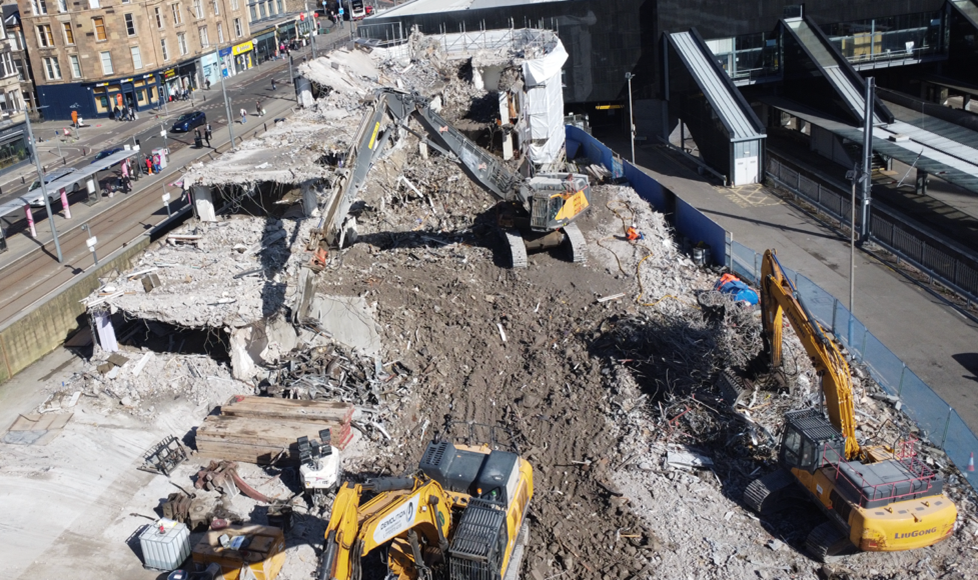
Less than 5 months following the successful collapse of the Boiler bay, weighing in at more than 20,000 even the complex task of processing the material for off-site recycling was made easy with the plant and labour employed, resulting the works being completed and the area ready for the blowdown of the Chimney, concluding works at the power station.
Completion of Works
True success will only be realised by the company when the final blowdown at the power station has been concluded however this is likely to be sooner rather than later as the team continue works on site ahead of the demolition of the chimney which is on programme for September this year, concluding the site’s safe, timely and sucessful demolition.
Whilst Demolition Services had adopted a cautious approach, going above and beyond in ensuring the successful demolition of each structure, they have demonstrated a clear desire to improve the demolition industry as a whole by encouraging and participating in knowledge share whilst offering guidance on future pre-weakening projects.
Demolition Services recognise the expertise and contributions made by Structural Engineer; Rob Clarke of Richter Associates, Explosives Engineer; Ian Beasley of SES and Structural Burner; Tim Arnold, at Demolition Services that we can celebrate the success of completing the demolition of the Ironbridge Power Station, not forgetting the many more team members that make such a project possible.
The ability to complete the demolition of a power station is unquestionably a niche in what is already a specialised industry and Demolition Services have without a doubt, surpassed all expectations.